↗
Silicon Graphics
 Computer MuseumCentral Texas
An IRIX workstation with a modular tower enclosure.
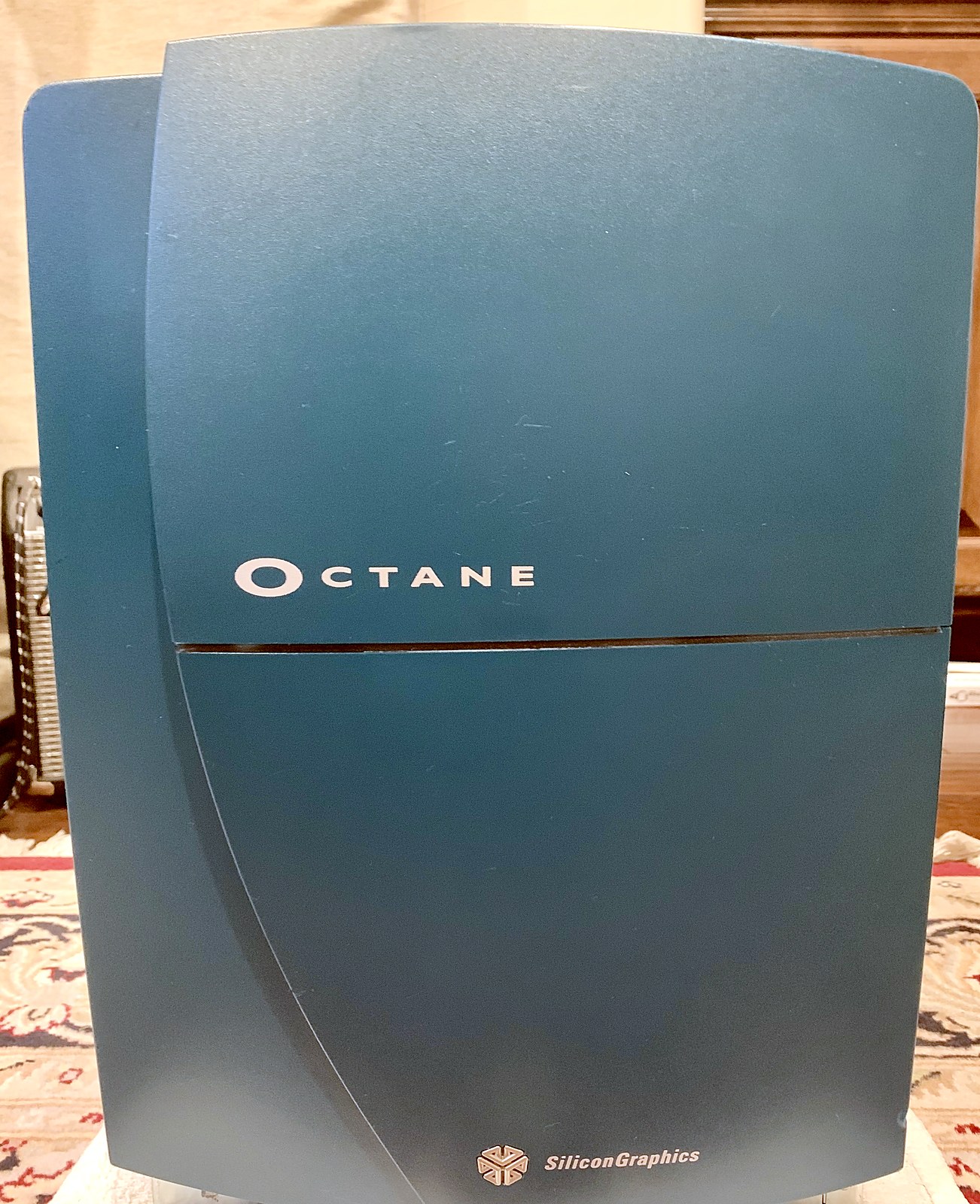
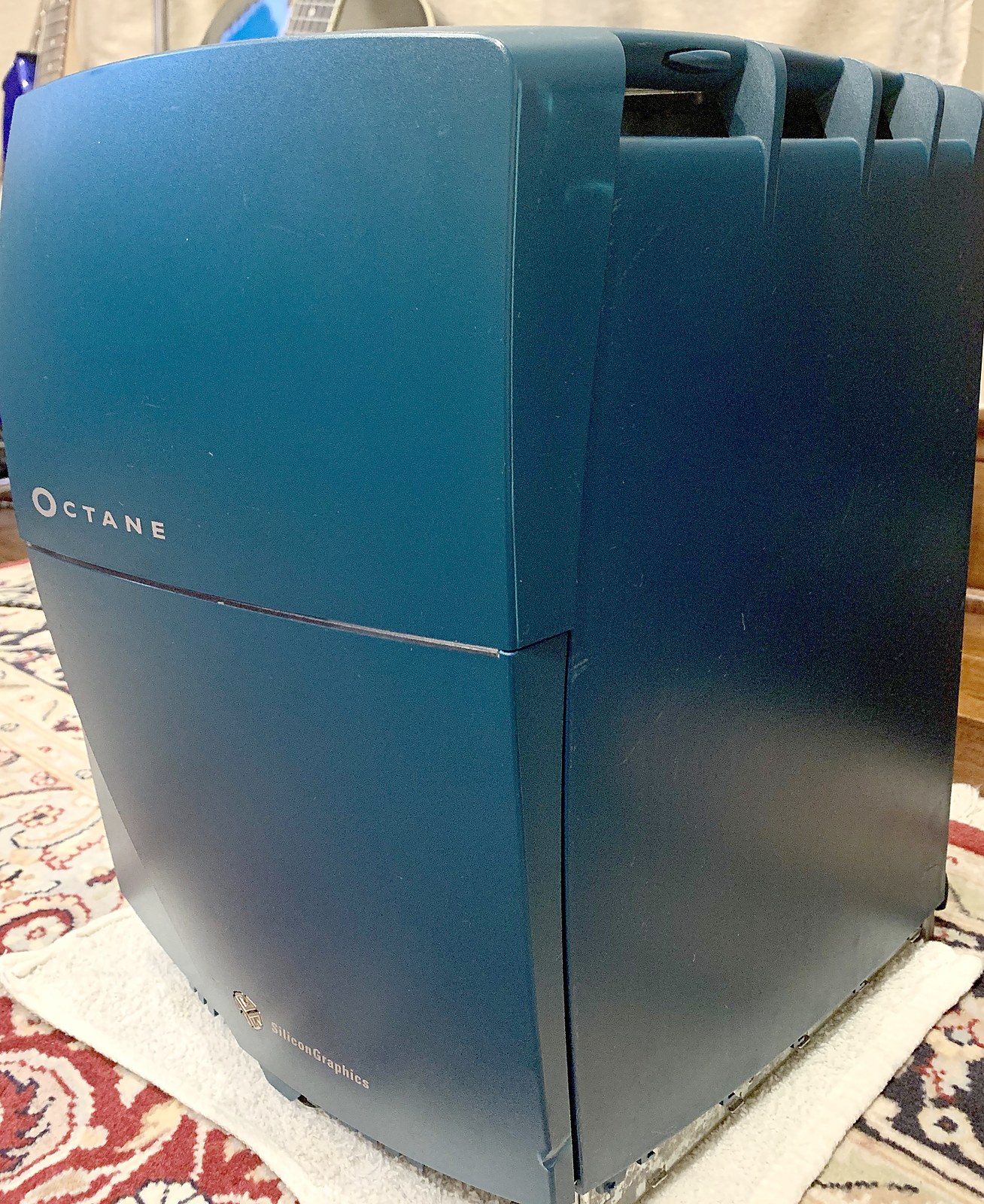
The Octane followed the Indigo² in SGI’s workstation range. The case photographs show the front, side, and internal layout of the example in this collection.
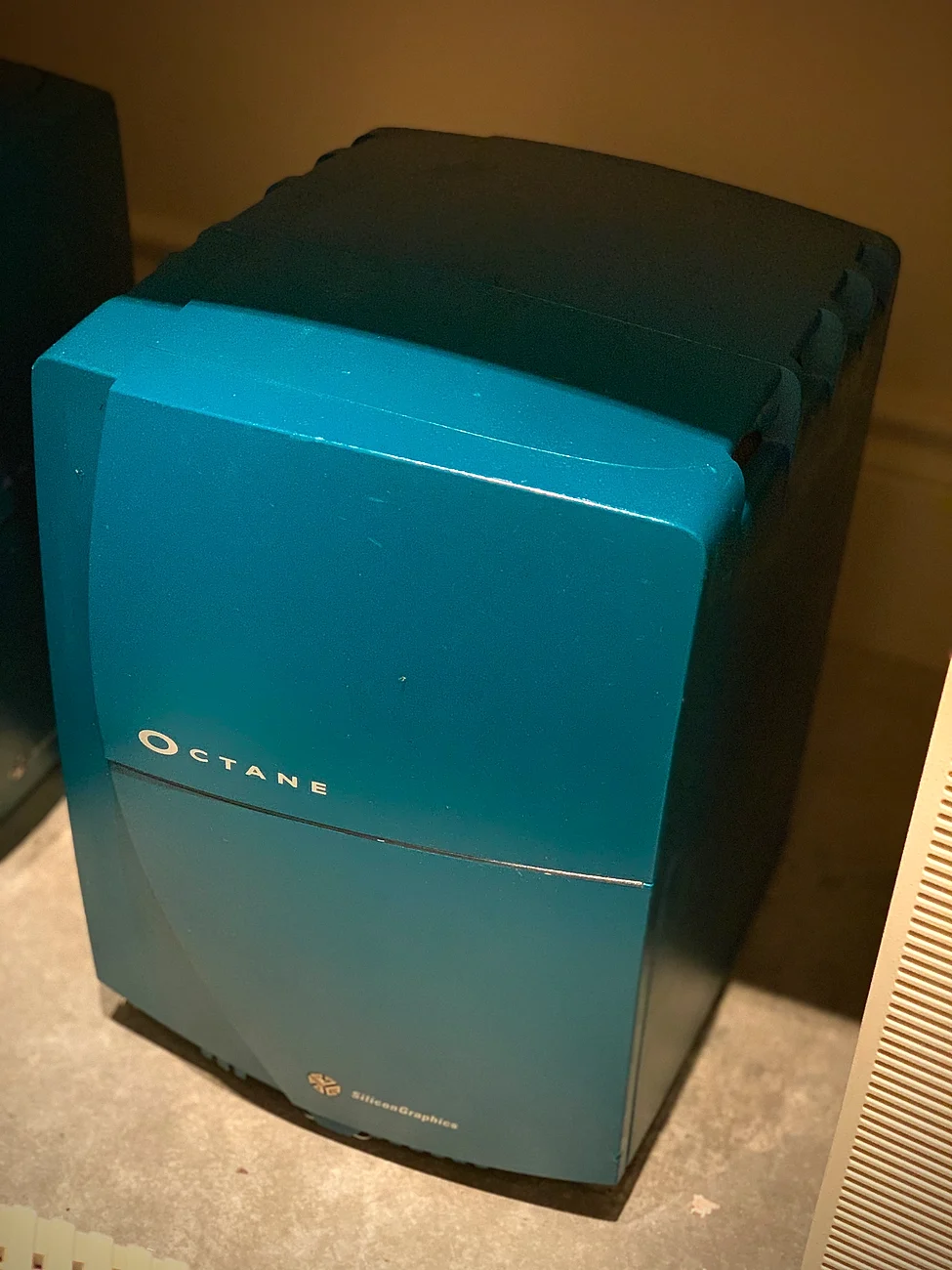
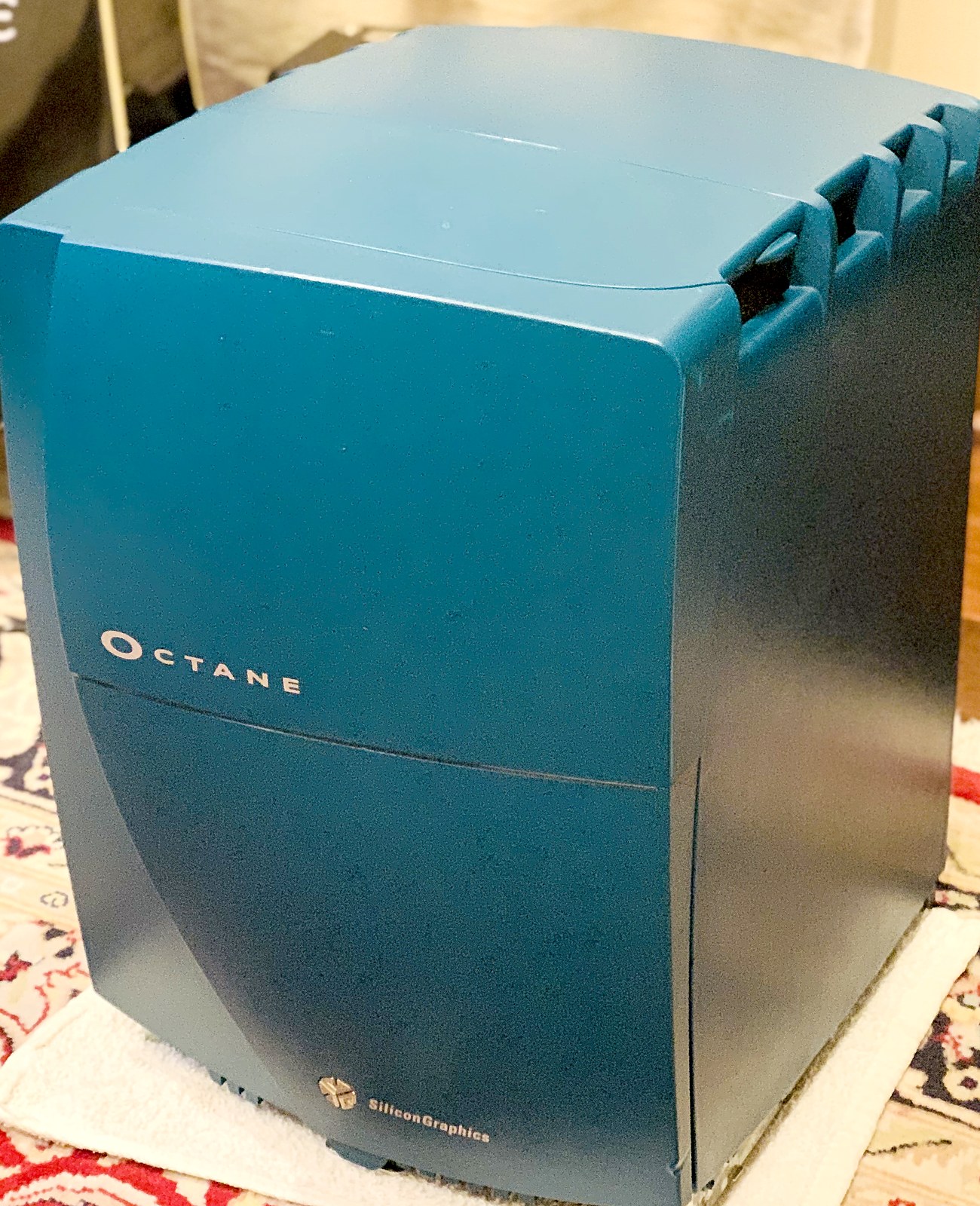
Photographs of the Octane as it is held in the collection.
| Introduced | 1997 |
|---|---|
| Processor | One or two MIPS R10000, R12000 or R14000, 175–600 MHz |
| Memory | Up to 8 GB, ECC |
| Graphics | IMPACT SI / SSI / MXI; VPro V6–V12 on Octane2 |
| Interconnect | XBOW crossbar ASIC, roughly 1.6 GB/s per port |
| Expansion | XIO, plus PCI via a shoebox |
| Operating system | IRIX 6.4 and later |
Almost every desktop of the period hung its processor, memory and graphics off a shared bus, so any two of them competing meant both waited. The Octane replaced the bus with a crossbar: a switch that opens a private path between any two ports at once. Graphics could stream from memory while a second processor worked and disk traffic moved, none of it contending. It is the same idea as a telephone exchange rather than a party line, and it is why the machine held its value long after its clock speed stopped being impressive.
The Octane followed the Indigo² in SGI’s workstation range. The case photographs show the front, side, and internal layout of the example in this collection.
Reference: ATX-OBJ-016-IMG-6119
Source: collection inventory, photographs, and notes accompanying Serious Machines (Amir Husain, 2024).